
April-Domesticated LIfe

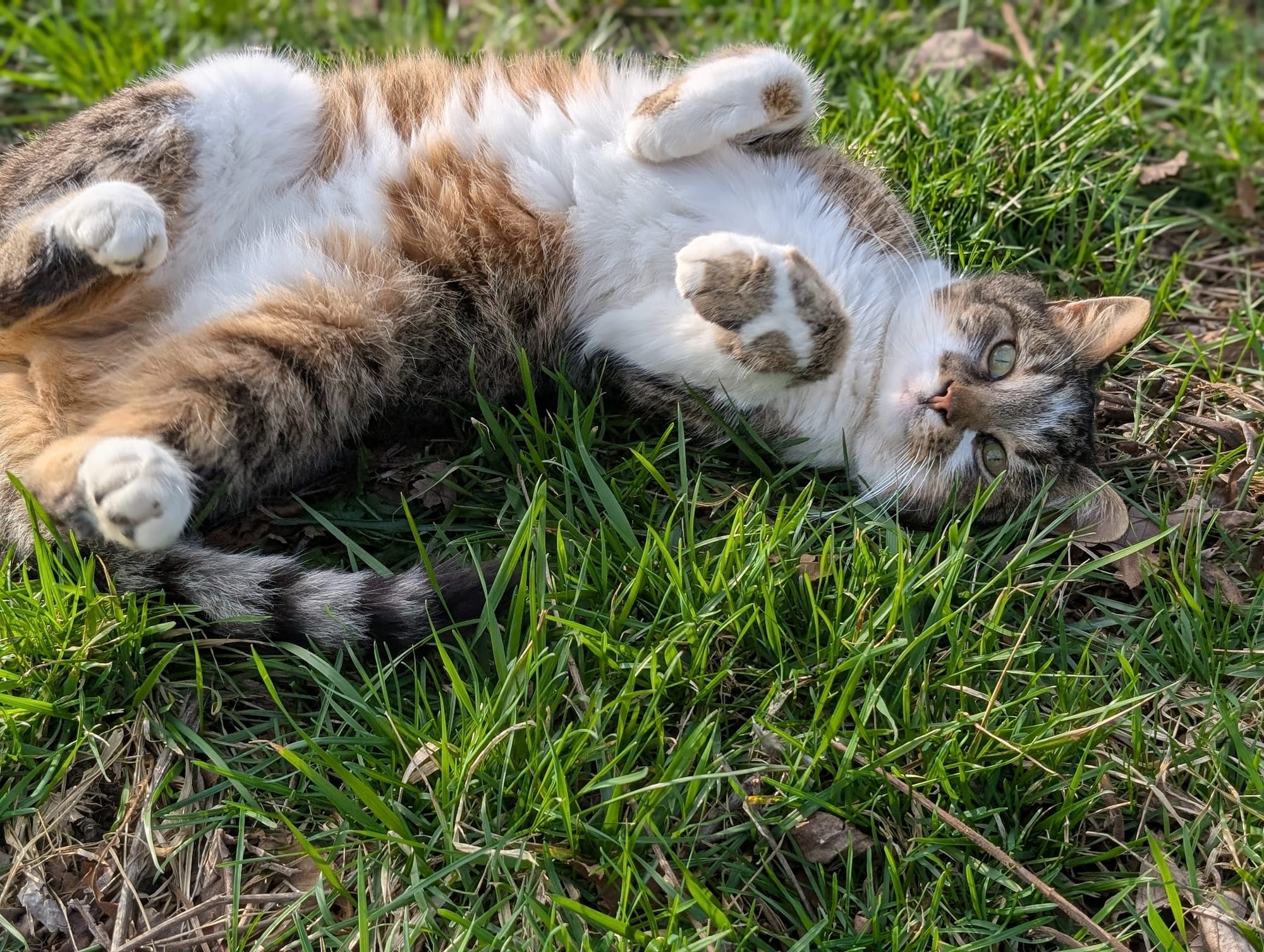
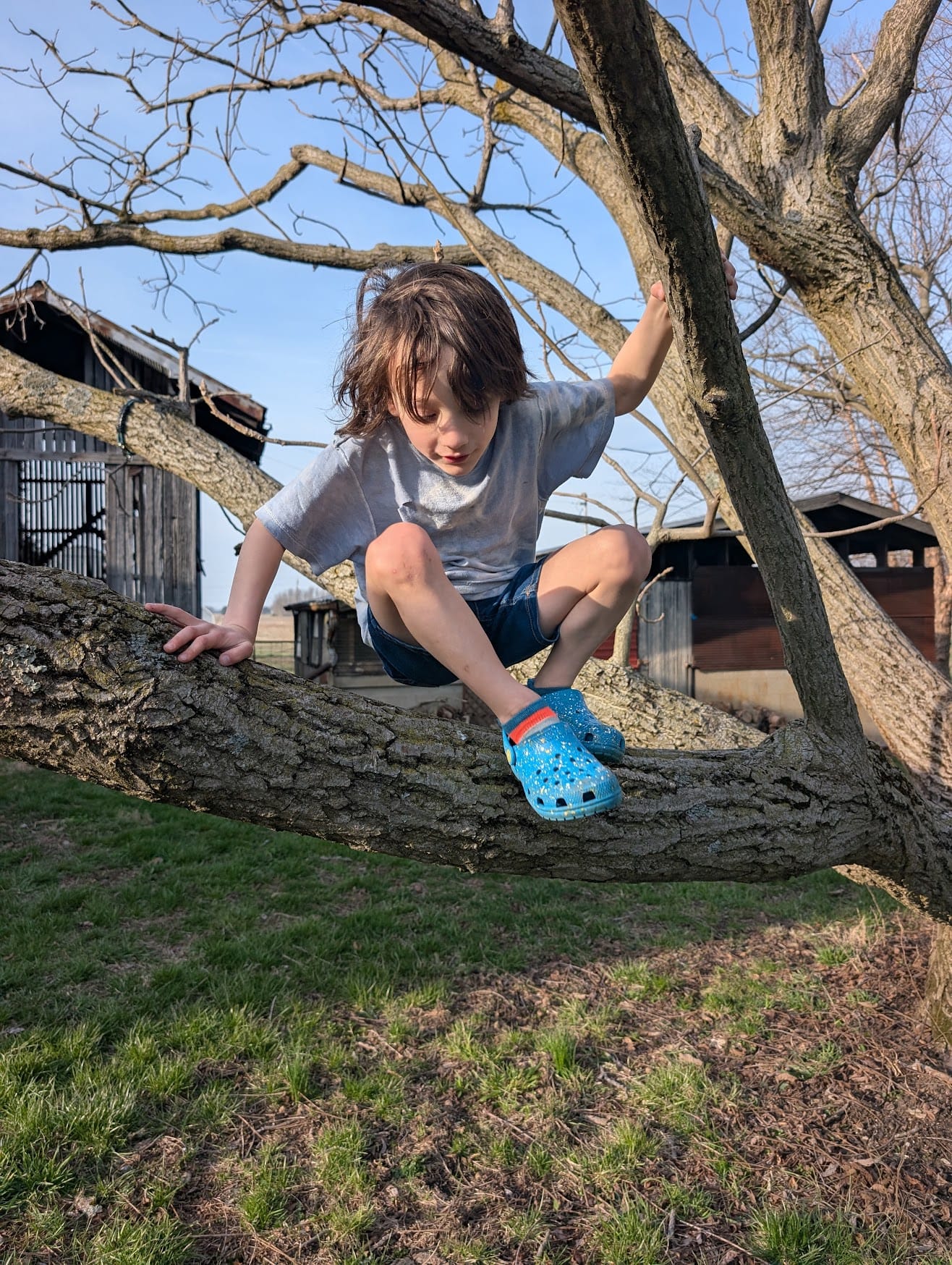
This time of the year you can often find Rich and I seeding trays of vegetables in the barn. It's one of my favorite spots on the farm...a table that sits against a wall of high windows facing east. When the kids aren't in school, I can look up from my seeding to catch them climbing the giant heartnut trees or disappearing into the woods, the dogs on their heels...four young creatures making a home of this place. During the day, our barn cat Rye is often napping somewhere within that same space. On one particular morning, I stumbled upon her making a nest out of a tarp we had haphazardly dragged into the room and heaped in a pile while battoning up the hatches outside in preparation for a wild wind storm. She was nestled just so and I was struck by the idea of her harboring kittens in her hovel. Of course she wasn't doing any such thing. We had both of our sister cats spayed when we brought them onto the farm. What a mother cat she would have made...
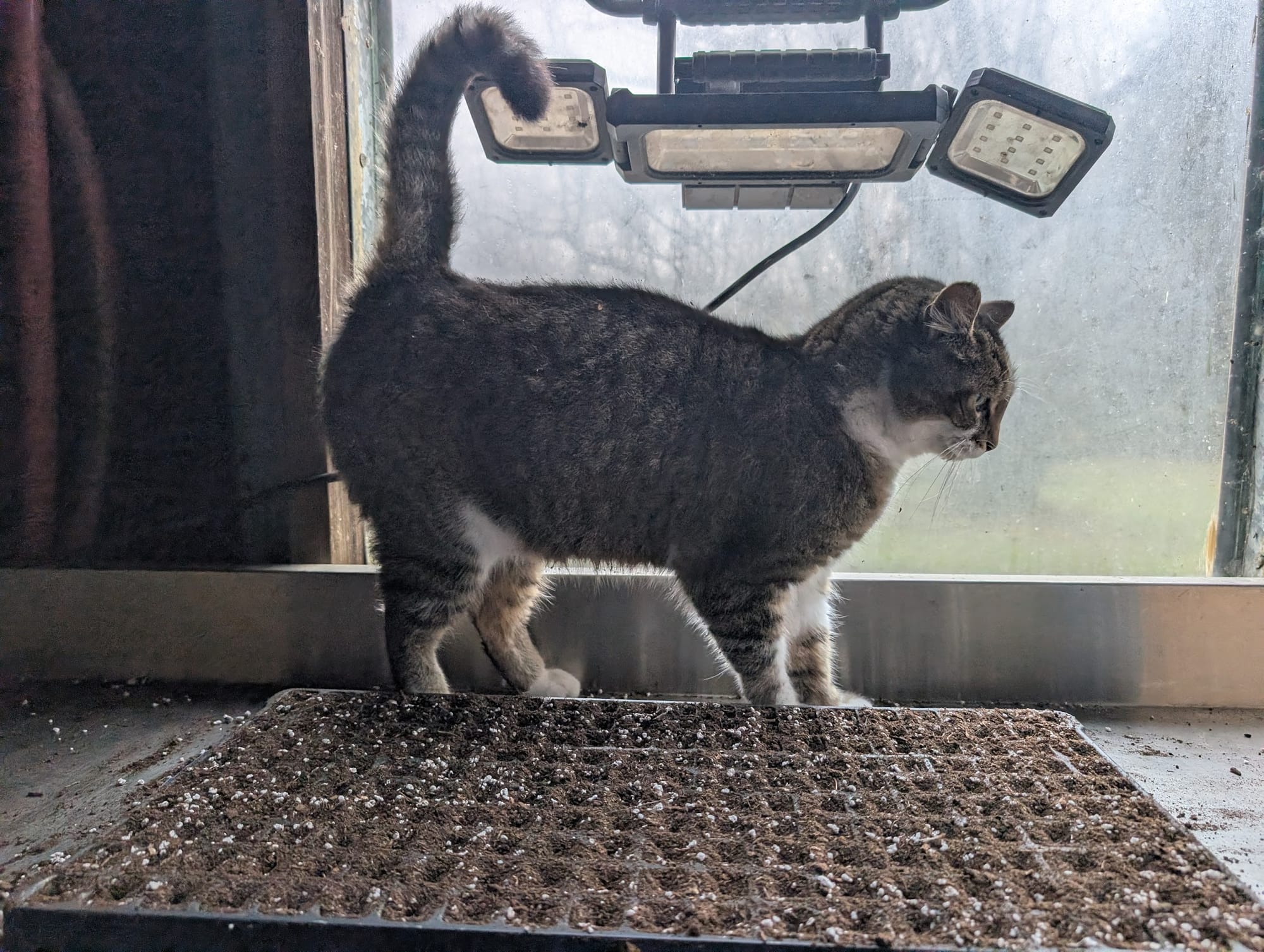
Cats proliferate in both cities and the country. They are often neglected and left to roam, mingle, and reproduce and there tends to be an overabundance of cats fighting for resources, hunting birds and other wildlife, spreading disease or parasites, and multiplying. And so we justify intervention and in this case sterilization. That day, in my mind's eye, I saw Rye assuming her biological role as a queen within the folds of our tarp. (Yes, mother cats are referred to as queens.) There is a part of me which regrets that I have inserted myself in the natural course of an animal's life. That piece of me coexists with another which understands the status of domestication. Though she lives among us, Rye maintains a lot of her wild, feline self...free to come and go as she chooses, keeping the mice out of our barn space, hunting and roaming the fields. She also lavishes in having food provided for her, a source of fresh water, and a domain. This subjugation of wildness is not so different from agriculture: our intervention in the living soil, cultivating it and encouraging the life we want to grow in its depths.
We are domesticators. By farming, we are taming the wild world. And while we do so, a part of us is taken in by it. We become a little un-domesticated, more terrestrial and less sophisticated. It's something like a rediscovery of ourselves as animals...attuned to the weather conditions, the signals being sent by the birds and also the ants, from the shift in the wind to the dandelions who only bloom en masse when the soil temperature is high enough. That yellow light indicates that conditions are ripe to plant potatoes. Considering the first sunshiney faces surfacing in the fields, we are within ten days of that time. While the dandelions activate the Flowering Locus T protein which begins petal and stamen genesis, we will cut our potato seed and let the scabs form in time to bury them in furrows in the field.
During the winter we are more integrated into the non-animalistic part of our lives...keeping up with May and Jack's elementary school lives, social time with friends and family who work within the reality of the modern, civilized world, and more time to tune into 'our times'. We get less dirt on our clothes and under our nails, but we have more time to be cultured! At this time we are the most domesticated version of ourselves. During our off season I can tend to fall back into the bad habits, for example scrutinizing our sweet farmhouse or my wardrobe, both of which are fully functional, and in our house's case: charming. I can sometimes get caught up in the external ideas of modern living, optimization, and the temptation to keep my finger on the pulse of politics, which I've found to be a misuse of my time. It's a time of the year that as a first generation farmer, I am yearly attempting to make better use of. To enjoy the stillness, to enjoy the time to play, to keep my mind from wandering.
At the emergence of spring, right now, when the soil is activated, and thus the farm, I feel myself coming back into my authentic life...balanced, functional, creative, and yes, dirtier (soilier?). I work on the ground and it does its work on me, evidenced by the smudges of soil I wipe off my face as I head to the school to pick up the kids, or the stick Jack pulls out of my hair when I get there.
Updates from the Farm:
-Online Ordering this Month: We will continue to offer online ordering this month. And spinach, radishes, pac choi and more will join the menu. Ordering opens on Mondays and pick up is on Saturdays! In fact, ordering for next weekend is open right now and we are making a few special goodies in light of the holiday and those who celebrate it.
-Market Starts in May: The Oakwood Market starts a month early this year. The first market will be on Saturday, May 2nd from 9-noon. We are soooo excited about this and can't wait to set up the booth sooner this spring.
-Earth Day Pop Up: Save the date for our Earth Day pop up at Pink Moon Goods (2027 East Fifth Street, Dayton). We will be popped up outside their door along with other vendors on Saturday, April 18th from 12-5pm. We will set up with everything we have to offer: produce, bread, bakes, granola, and hopefully the first batch of spring floral jelly :).
-Minimal Plant Sale This Year: Rich and I decided to grow more veggies this year, which means more veggie starts in our prop house. Therefore, we will have minimal spring plants for sale. I am starting potted herbs for sale and we will have a small amount of peppers and tomatoes as well. I may surprise you with other plants if we have surplus. But I wanted to give you a heads up as you plan for your gardens.
-No Chickens Yet: I am hoping to hear from my 'hen guy'. This is a new 'hen guy' and so far we are still waiting on the troop of hens he promised us. I was expecting to get the call a few weeks ago. When I checked in, he said it's not quite time :/. I'll keep you abreast of the situation. Pun intended.
-Deer Fencing Project: While we are seeding in the field and cultivating the hoops, we are also installing deer fencing around all of our planted areas. We planned a double fenceline which challenges deer's depth perception as they aren't sure if they can clear two staggered rows of fencing. This has worked for many farmers and we are hopeful it works for us so that we don't have to invest labor and cash into surrounding all of our growing spaces with 12-foot deer fencing. Fingers crossed for plan A!
Thank you for reading :)
If you would like to support my writing you can do so below: