
Reinforcing Calluses

Gratefully, we are finding our feet underneath us as we walk deep into January. We were swept up in some sort of holiday season vortex that only the stillness of this month could extract us from. The four of us have left lotusland: a few weeks of unadulterated time together, indulging in Christmas sweets, hardly as sweet as our year-end traditions and candlelit dinners with the dogs at our feet. Admittedly it was a ruder awakening for May and Jack who had to gear up for school. One day, if they play their cards right they'll find something to do with their lives that they're grateful to get back to.
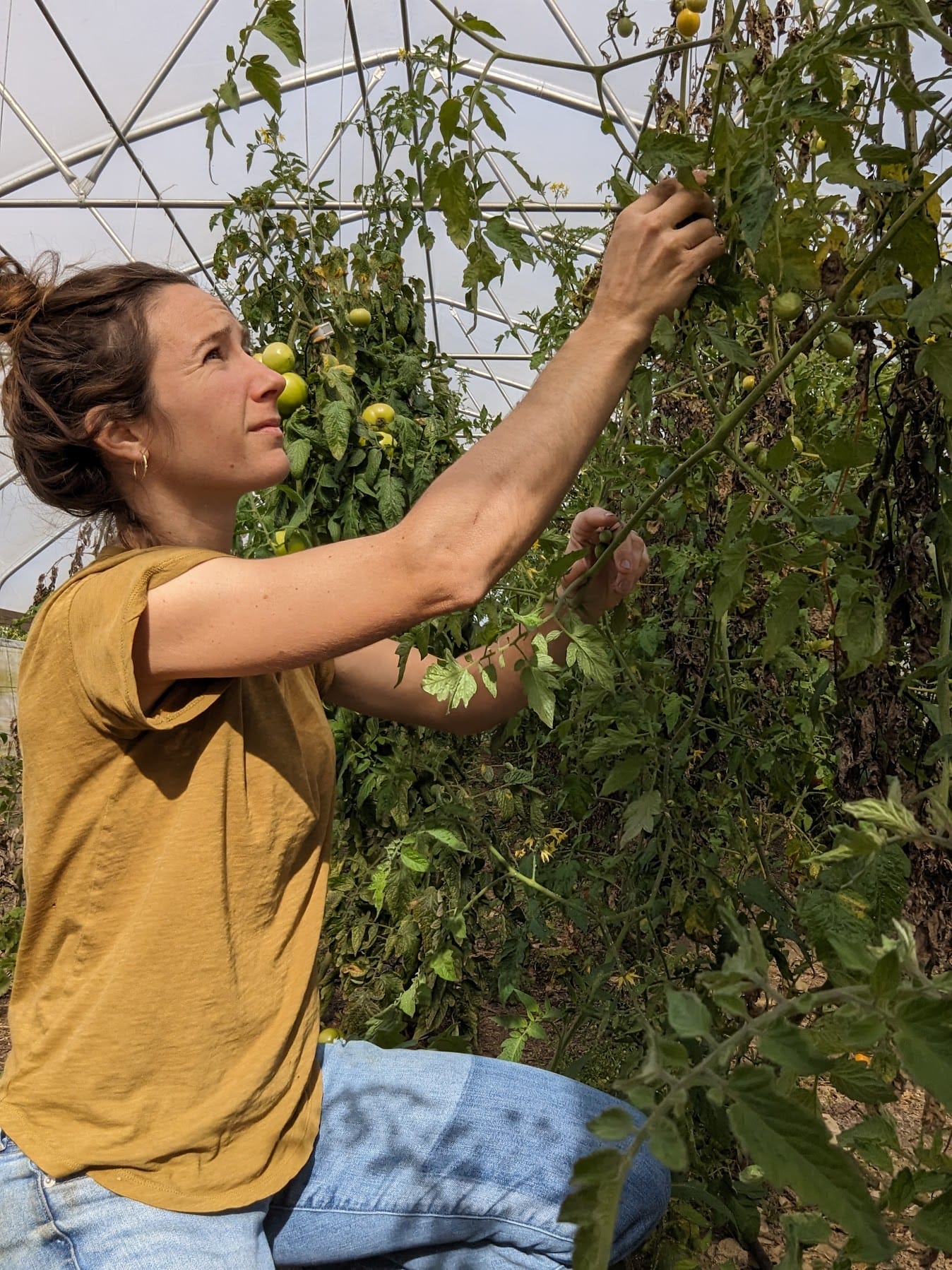
Last year's tomato high tunnel-that-could pumped out fruit into November. At some point we left it to fall into dormancy as we raced the frost to pull in our late winter haul of broccoli, cabbage, beets and carrots from the fields. And so, as the kids dusted off their backpacks after Christmas break, I suited up to attend to the high tunnel: insulated pants, my diehard winter coat and cap, and garden gloves. I set about un-trellising spent plants and organizing the hooks and clips with an audiobook about a heat wave to counteract the air temperature and keep me company. Pulling the plants out, I paid my respects for so much fruit borne over the course of the wild 2025 growing season. We were really in it together, and after enough passes through these aisles of tomato jungle over the past year, I can even remember individual plants who were real givers. So long Dr. Wyche, Black Cherries and Moskvich reds...Annual agriculture is a killer in that way, all gone so soon. The fallen fruit, inevitably trampled into the soil as I worked, will seed its kin, who will volunteer themselves amidst the ginger that will be transplanted in the same space this summer. Volunteers are often stronger than the tomato transplants we start in our propagation house. They want to be there. And could it be that they even carry forth some of the intelligence of their parent plant which lived a year in the life of our Celina silt loam and know this exact patch of earth?
Indeterminate tomatoes dig their feet deep into the soil, because they have nearly limitless bounds and can climb to the sun until winter comes for them. The more top growth they put on, the deeper their roots swim through the soil, seeking out water and nutrition to conspire with the sun and feed the plant. Therefore, the catharsis of pulling the plants gets physical, and I too seek out more water. Plants are piled and then lugged outside where the wintry air rejuvenates me, while surprising my lungs. I didn't realize that the noncomittal sun was warming the hoop while I was in there...or maybe it was the heat my body was generating from the first big job after our break, accumulating in the 2100 square feet of insulated space. Is it me or is it now as hot as my summertime days in the hoops when I rely on the canopy of jungle to shade out the sun so that I can prune and harvest? No, no, it's just teh burning of being broken in by the endorphin-stimulating labor that got me hooked on this work in the first place.
The dead plants accrue in a pyre, set to burn off any diseases living within their tissues. Fusarium wilt, leaf spot, and late blight can survive to see another season in our compost pile, and so for hygiene's sake, we burn it. And then to alleviate the topmost layer of soil of the chickweed which has sprung up, kelly green, at the feet of the withered tomato plants. It is a vigorous nonnative that thrives in early spring and also in the conditions found in the unheated winter hoop which holds heat from the sun and keeps soil temperatures warm enough. Switching sides to give one oblique a break and then the other, the buckle hoe skims underneath the shallow-rooted chickweed and occasionally reveals an overwintering lady bug or other little critter who I can't wait to see come to life again in the spring.
After three days of this project, I huffed and puffed in the entryway to the high tunnel, looking out over a barren space, a sea of seed bed. The first seeds that will grow here were stirred to germinate by my disturbance. Weeds, which are meant to grow in disturbed spaces to prevent erosion, add nutrition and return life to barren soil, sit in wait in the weed seed bank of the ground which we chip away at in a tale as old as time called agriculture. After a couple of weeks-worth of morning dew and free access to grow, the first flush of weeds will emerge and we will hoe them down, assuring them we have a plan for the space: our first spring carrot rotation. Pass after pass with the walk-behind seeder and little Mokum and Napoli germ are tucked in and we wish them well. It is spring in the hoop after all and so in a few weeks, we'll see most of their wispy little faces. And in time this hoop will be a vision of carrot tops, frilly green pony tails for the waking lady bugs to get lost in.
Back in the real world it's still very much winter and I sidle up next to Rich on the couch who's juggling a myriad of winter fix-it and renovation projects. Showered off and relaxing in the heat of the woodstove, it registers that my palms are blistered from my grip on the buckle hoe. In just four short weeks of lighter work and admin, they've softened, forgetting what they're capable of. It's time to restore the calluses. We have another hoop to flip, we start onion seeds in a few weeks, and I have flower and herb beds to clean up on the more generous winter days when the wind abates. Daylight hours are growing longer, easing us back in. And boy, am I glad to be here, blisters and all, to be perpetually broken in and grounded by the farm.
Thank you for reading.
If you would like to support my writing you can do so below: