
June-Blast Off

I'm not sure that I'm built to withstand a five-inch rain. Both the roof of the old farmhouse and our field tolerated it better than me. On Wednesday, five inches of rain fell like a great waterfall with so much momentum behind it, it pours forth indefinitely. It hit the roof with a force, careened over the edges and into the garden beds skirting the house and then straight through my nervous system. I closed the blinds and I closed my eyes. Where was that gritty part of me that did the hard work to get here? Maybe it got tangled up during one of last season's epic weather events. I note my insecurity, that of a first generation farmer, who hasn't seen enough catastrophic rains to know the field won't float down Wolf Creek. Or to understand how long each plant family can sit in rice paddy conditions before suffocating and succumbing to anaerobia.
It could be that my fear center is doubly tapped: evidently by our immediate flooding situation and more generally overwhelmed by the existential crisis that the Earth is experiencing...extreme weather becoming more frequent, century-old climatic patterns dissolving. It could be that the massive budget cuts to the meteorology department and the lack of a reliable forecasting tool over the past two years has thrown yet another wrench into the business of farming and raised the level of difficulty. It could be that I never learned to manage my "worry wart" anxiety that has lived somewhere inside of me since I was young, transforming as I cycle through the phases of my life.
But then, by the nature of the beast, the swelling of spring absorbed the shock of the rain. Before twenty-four hours passed, the majority of our fields drained. The back field which lies lower than the rest maintained inches of standing water for another twelve hours. But, by God, the vigor of spring advancing toward summer drank it up. The land can foresee the extensive, hot, sunny days that lie ahead and the burgeoning plantlife drank deeply in anticipation. Ups and Downs. Every season sees loss. And so...we will wait to see if the san marzanos, a batch of beets and half of our potatoes planted in the back field fight off the stress they just went through waiting for the chance to breathe. If they can't take it, then we move ahead with the survivors in the field and tend to them, grateful for their resilience. And we reseed what has enough time to play catch up.
The rain started before the kids left for school on Wednesday. And it didn't relent until hours after they were home. But by the time the front had moved along and dinner was digested, May suggested we hit the bike path that runs along the farm. And feeling the exhaustion of the day's stress and helplessness, as well as the desire to be away from the farm, which I dared not look at for too long to see our months of work underwater, I was glad to join her. She and I took to the path, the sky strikingly serene and calmly blue in contrast to the incredibly foreboding, rolling grey and black sky from earlier in the day. Oddly the sound of water rushing and the glittering expanses of standing water in the fields on either side of us were beautiful in the evening light. The trees the metropark have protected that stand guard along the pathway looked better off for the hydration, like a midwestern jungle.
The rain fell, but then the sun came and it's suggested that it may stay and rain won't come again until another day, far away, at the end of next week. And with the temperatures rising, there's no time for mourning any loss. It's time for blast off. Plants are growing. The tomatoes and peppers tucked safely into the high tunnels are flowering and a few setting fruit. And the school bell rang for the last time this year. Blast off. Even though it can't be possible that the school year is over, it is. May and her third grade class were clapped out of the elementary school building they have known for the first four years of their school career. They'll move into the intermediate school building next year and be assigned lockers and a new set of both responsibilities and possibilities. Jack celebrated his first year as a full-time student, accelerating out of kindergarten, full speed ahead, a miniature man. And suddenly we find ourselves reunited, the four of us, for another summer on the farm.
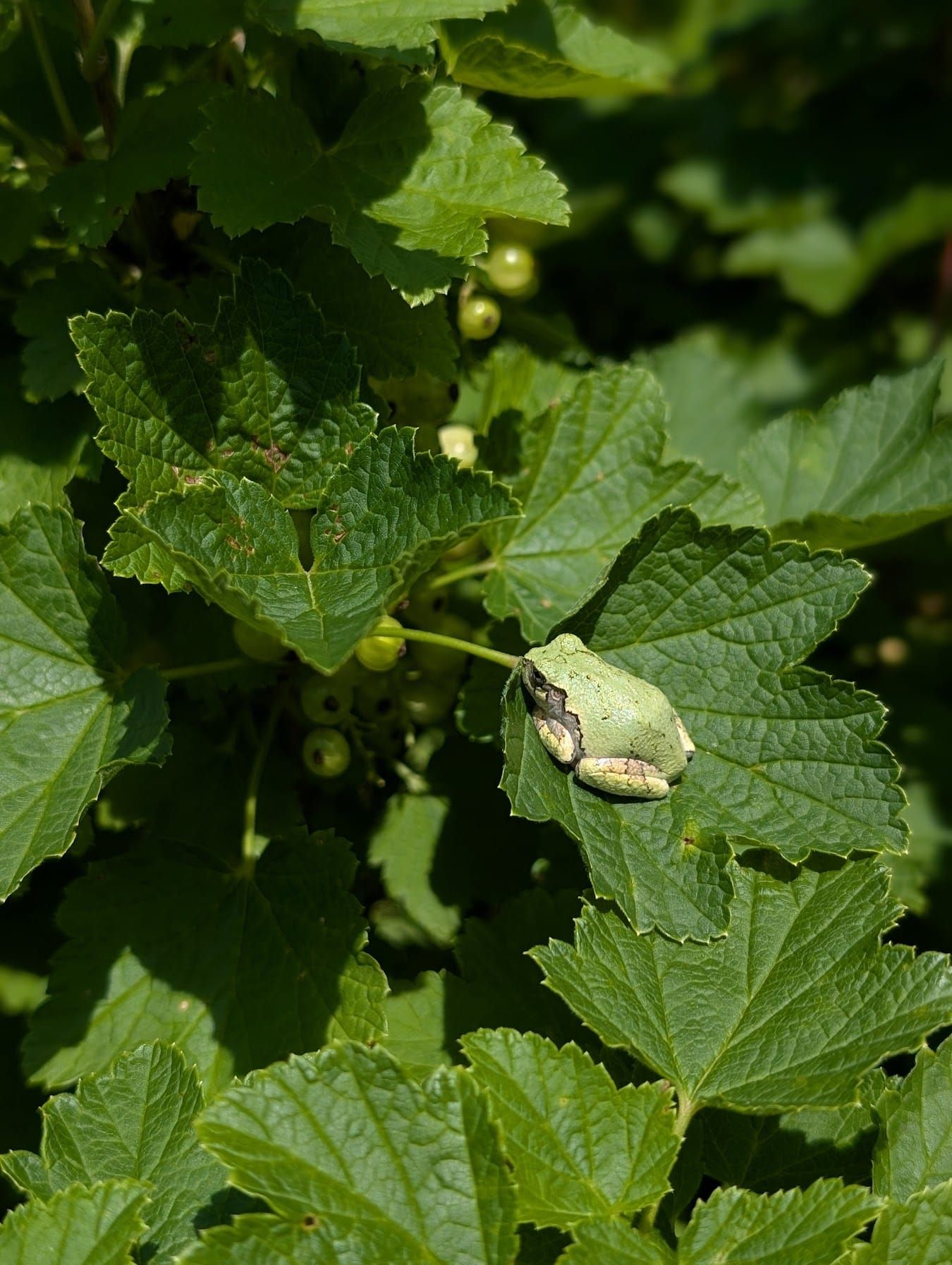
On day one of school kid summer, with the farm in aquatic mode, perfectly genial for amphibians, I discovered my first little green frog in the currant patch. Green frogs are late bloomers and emerge in late May. They have no ribs or diaphragms and so their throats pump rapidly to force air into their lungs. It is called buccal pumping. Watching them breathe, they look super charged. And though late, they're electric, all systems go. What other way is there to be when the season is here to be taken and run with?
Blast off mode prevents wallowing and insists on forward motion. It invokes resilience and building calluses. Another dose of humility is dished out by Mother and my skin is a layer thicker. The better to weather the next storm.
Updates from the Farm:
-Oakwood Farmers Market in Full Swing: Every Saturday 9-noon, we will be at the market :). Each week we should see the tables grow fuller with veggies. Rich will not consistently be baking sourdough bread as the farm requires so much of our time.
-Solarizing the Farm: We've decided to install solar panels to power our coolers, well, etc. It's a big project and feels like the right time to do so.
-After the Storm: the rains we have had for the last couple of weeks, culminating in that 5-inch rainfall wreaked some havoc in the fields. The three hoop houses with our tomatoes, peppers and ginger were unaffected. Post-storm we have been waiting for these excellent sunny, dry days to dry out the soil enough to work. We're just about there and can get in to plant the last major transplant of the season: our winter squash. We're hopeful that most crops pull through. It's likely we will have less potatoes and need to reseed our summer beets. C'est la vie. This is the nature of our work. Our fields drained particularly quickly in comparison with neighboring farms who grow row crops and have no perennial plants or trees on their farms. We are always aiming to grow the soil more resilient, improving structure so that it drains well. We also aspire to install more covered space (hoop houses) as they mitigate the wind and rain events.
-Growing Chicks: The layer chicks are growing well and are eager to move into outdoor space next month. They've just started to eat greens in addition to their grain :). Sweet girls.
Thank you for reading :)
If you would like to support my writing you can do so below: